Level 1 - Lesson 13
The lesson uses home and classroom objects to practice small quantities. You focus on the right measure word for each noun.
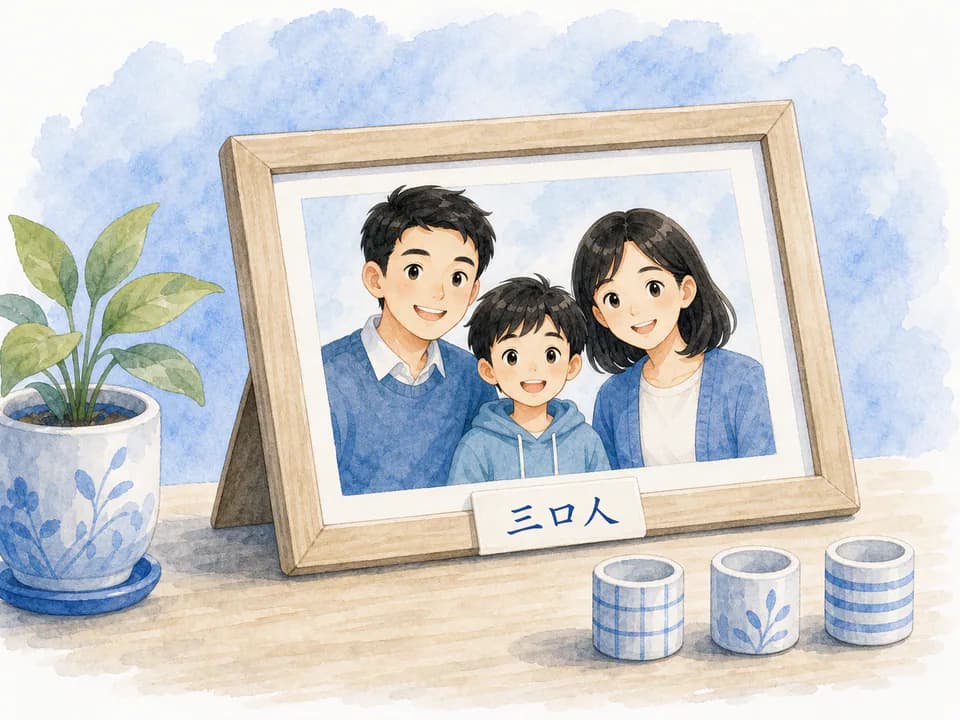
Contains 4 words
measure word (general)
measure word (books)
measure word (family members)
measure word (animals)
Contains 2 words
Contains 2 words
Contains 3 words
一个人
Yí gè rén
one person
一本书
Yì běn shū
one book
一个杯子
Yí gè bēizi
one cup
两个杯子
Liǎng gè bēizi
two cups
三口人
Sān kǒu rén
three family members
Situation: A classmate asks how many people are in a family and who the three people are.
美美
Meimei
你家有几口人?
How many people are in your family?
Numbers, measure words, and quantity questions
Chinese often places a measure word between the number and noun: 三口人 (sān kǒu rén), 一本书 (yì běn shū), 一只小猫 (yì zhī xiǎo māo). Use 几 (jǐ) with a measure word to ask small quantities, and use 多少 (duōshao) for a more open quantity question.
Count a noun
Counts people, books, cups, or animals with the right measure word.
how many; how much
few; little
cup; glass
home; family
cat
dog
small; young
你家有几口人?
Nǐ jiā yǒu jǐ kǒu rén?
How many people are in your family?
我家有三口人。
Wǒ jiā yǒu sān kǒu rén.
There are three people in my family.
要几个杯子?
Yào jǐ gè bēizi?
How many cups are needed?
多少人
Duōshao rén
how many people
很少
Hěn shǎo
very few
我家有猫
Wǒ jiā yǒu māo
my family has a cat
他家有狗
Tā jiā yǒu gǒu
his family has a dog
方方
Fangfang
我家有三口人。
There are three people in my family.
美美
Meimei
都是谁?
Who are they?
方方
Fangfang
爸爸、妈妈和我。
My father, my mother, and me.
Situation: Classmates check the group size and count cups and books for the group.
美美
Meimei
有多少人?
How many people are there?
方方
Fangfang
四个人。
Four people.
美美
Meimei
你有几个杯子?
How many cups do you have?
方方
Fangfang
我有两个杯子,五本书。杯子少,书不少。
I have two cups and five books. There are few cups, but quite a few books.
Situation: Two classmates ask how many dogs are at home and describe the small dog.
美美
Meimei
你家有几只狗?
How many dogs does your family have?
方方
Fangfang
我家有一只小狗。
My family has one small dog.
美美
Meimei
小狗几岁了?
How old is the dog?
方方
Fangfang
两岁了。
It is two years old.
Situation: Two classmates count cats and ask whether there is also a dog.
美美
Meimei
你家有几只猫?
How many cats does your family have?
方方
Fangfang
两只小猫。
Two small cats.
美美
Meimei
有狗吗?
Do you have a dog?
方方
Fangfang
没有狗。
There is no dog.
三口人 (sān kǒu rén) uses 口 (kǒu) because the sentence is counting people in a family.
Ask a small expected quantity
Asks how many when the answer is expected to be a small count.
几口人 (jǐ kǒu rén) asks how many family members.
Ask an open quantity
Asks how many without choosing a measure word first.
多少人 (duōshao rén) asks about the number of people more generally.
Use 口 (kǒu) when counting family members.
三口人
three family members
Use 本 (běn) when counting books.
一本书
one book
Use 个 (gè) as the general measure word for 杯子 (bēizi).
一个杯子
one cup
Use 只 (zhī) when counting small animals.
一只小猫
one small cat
Use 几 (jǐ) with the measure word when asking for a small expected count.
几口人
how many family members
Keep the measure word after 几 (jǐ).
几本书
how many books
Use 多少 (duōshao) before the noun for a more open how-many question.
多少人
how many people
你家有几口人?
How many people are in your family?
你有几本书?
How many books do you have?
有多少人?
How many people are there?
Dialogue 01: A Family of Three, Turn 1
Ask family count
你家有几口人?
How many people are in your family?
Dialogue 01: A Family of Three, Turn 2
Answer family count
我家有三口人。
There are three people in my family.
Dialogue 01: A Family of Three, Turn 4
Count a pet
有,我家有一只小猫。
Yes, my family has one small cat.
Dialogue 02: Checking Class Supplies, Turn 1
Ask an open count
有多少人?
How many people are there?
Dialogue 02: Checking Class Supplies, Turn 3
Ask cup count
你有几个杯子?
How many cups do you have?
Chinese often places a measure word between the number and noun: 三口人 (sān kǒu rén), 一本书 (yì běn shū), 一个杯子 (yí gè bēizi), 一只小猫 (yì zhī xiǎo māo). Use 口 (kǒu) for family members, 本 (běn) for books, 个 (gè) for general nouns such as people or cups, and 只 (zhī) for small animals. To ask a small expected quantity, put 几 (jǐ) before the measure word, as in 几口人 (jǐ kǒu rén) or 几本书 (jǐ běn shū). Use 多少 (duōshao) before a noun when the number is more open, as in 多少人 (duōshao rén).
Close possession (no 的)
With the close relationship word 家 (jiā), put the person directly before it: 我家 (wǒ jiā) for my family or household and 你家 (nǐ jiā) for your family or household.
Put the person directly before 家 (jiā)
Names someone's family or household in the natural close-relationship form.
你家 (nǐ jiā) asks about your family or household. Keep 的 (de) in ordinary possession phrases such as 我的书 (wǒ de shū).
Use the direct form with 家 (jiā) for the ordinary family or household meaning.
我家
my family / my household
An ordinary possessed noun such as 书 (shū) keeps 的 (de).
我的书
my book
你家有几口人?
How many people are in your family?
我家有一只小猫。
My family has one small cat.
Dialogue 01: A Family of Three, Turn 1
Ask about the listener's family
你家有几口人?
How many people are in your family?
Dialogue 01: A Family of Three, Turn 2
Answer about the speaker's family
我家有三口人。
There are three people in my family.
The usual possession pattern uses 的 (de), but a few very close relationship phrases commonly leave it out. In this lesson, learn the reliable pattern person plus 家 (jiā): 我家 (wǒ jiā) and 你家 (nǐ jiā). Here 家 (jiā) means the person's family or household.
Do not remove 的 (de) from every possession phrase. Use the direct no-的 (de) form with the close relationship pattern taught here. A phrase such as 我的书 (wǒ de shū) still needs 的 (de), and 我的家 (wǒ de jiā) can emphasize my physical home rather than the ordinary household expression 我家 (wǒ jiā).
Why it matters
我家 (wǒ jiā) uses the same direct person-plus-家 (jiā) structure.
Focus
Dialogue 03: Counting a Dog, Turn 1
Ask about pets in the household
你家有几只狗?
How many dogs does your family have?
