Level 1 - Lesson 15
This lesson uses books, chairs, tables, rooms, and sides to practice saying where things are.
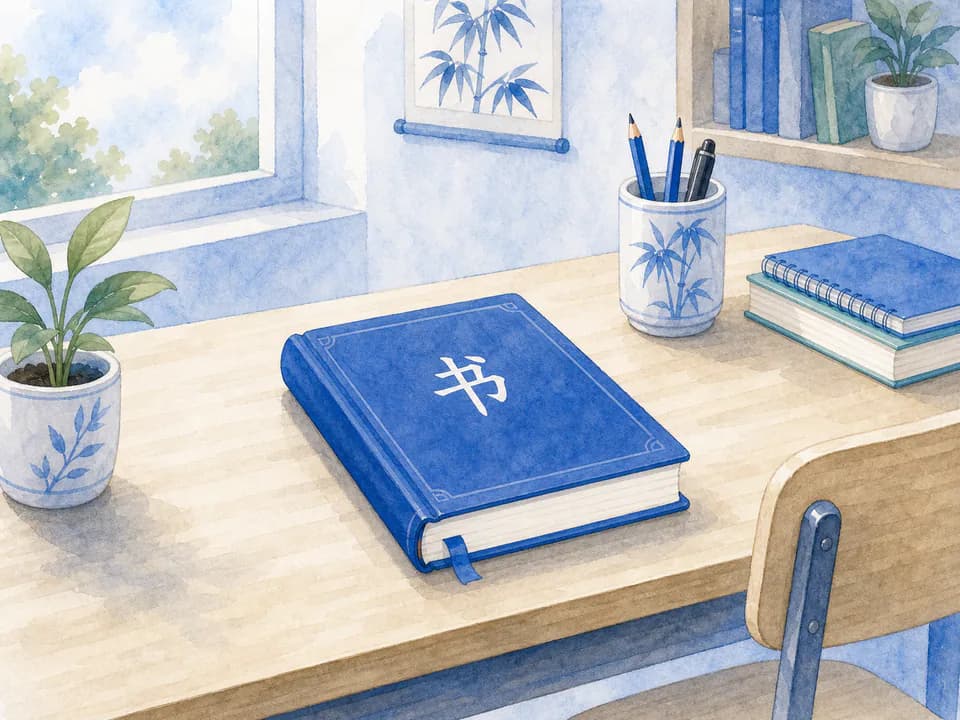
Contains 4 words
at; in; on
where; especially common in northern speech
where
inside
Contains 4 words
Contains 8 words
Contains 2 words
Contains 2 words
Contains 2 words
你在哪儿?
Nǐ zài nǎr?
Where are you?
你在哪里?
Nǐ zài nǎlǐ?
Where are you?
他在哪儿?
Tā zài nǎr?
Where is he?
我在这儿。
Wǒ zài zhèr.
I'm here.
我在这里。
Wǒ zài zhèlǐ.
I'm here.
Situation: A student cannot see her book, and a classmate points to the table.
美美
Meimei
我的书在哪儿?
Where is my book?
Location with 在
Use 在 (zài) between the person or thing and its location.
Say where something is
Places a person or thing at a location.
here; especially common in northern speech
here
there; especially common in northern speech
there
side; edge
this side; here
that side; over there
outside
front; in front
back; behind
above; on top
below; underneath
outside
room
chair
table
up; on; above
down; under; below
他在那里。
Tā zài nàlǐ.
He's there.
老师在哪里?
Lǎoshī zài nǎlǐ?
Where is the teacher?
他在那里吗?
Tā zài nàlǐ ma?
Is he there?
不,他在这里。
Bù, tā zài zhèlǐ.
No, he's here.
书在桌子上
Shū zài zhuōzi shàng
The book is on the table.
椅子在桌子下
Yǐzi zài zhuōzi xià
The chair is under the table.
房间里有桌子。
Fángjiān lǐ yǒu zhuōzi.
There is a table in the room.
方方
Fangfang
你的书在桌子上边。
Your book is on the table.
美美
Meimei
在这儿吗?
Is it here?
方方
Fangfang
在,在这儿。
Yes, it is here.
Situation: Students check where the chair and book are in the room.
美美
Meimei
椅子在哪儿?
Where is the chair?
方方
Fangfang
椅子在桌子下边。
The chair is under the table.
美美
Meimei
椅子在这边吗?
Is the chair on this side?
方方
Fangfang
不,在那边。
No, it is on that side.
Situation: A student looks for Teacher Wang and confirms whether she is outside or inside the room.
美美
Meimei
老师在哪里?
Where is the teacher?
方方
Fangfang
老师不在外边,在房间里。
The teacher is not outside; she is in the room.
美美
Meimei
她在房间前边吗?
Is she at the front of the room?
方方
Fangfang
不,她在房间后边。
No, she is at the back of the room.
Situation: Two classmates narrow the location of one table inside a room.
美美
Meimei
桌子在哪里?
Where is the table?
方方
Fangfang
桌子在房间里。
The table is in the room.
美美
Meimei
在椅子前边吗?
Is it in front of the chair?
方方
Fangfang
不,在椅子后边。
No, it is behind the chair.
书在这儿 (shū zài zhèr) means the book is located here.
Put 在 (zài) between the thing and the place.
书在这儿。
The book is here.
The same pattern locates a person.
老师在那里。
The teacher is there.
老师在前边。
The teacher is in front.
桌子在外边。
The table is outside.
Dialogue 01: Finding My Book, Turn 1
Ask where a book is
我的书在哪儿?
Where is my book?
Dialogue 01: Finding My Book, Turn 2
Answer with a place phrase
你的书在桌子上边。
Your book is on the table.
Dialogue 03: Looking for the Teacher, Turn 2
Locate a person
老师在前边。
The teacher is in front.
Use 在 (zài) between the person or thing and its location. Ask with 在哪儿 (zài nǎr) or 在哪里 (zài nǎlǐ), then answer with 在 (zài) plus a place word such as 这儿 (zhèr), 那里 (nàlǐ), 前边 (qiánbian), or 外边 (wàibian).
Directional words
Put a position word after a reference place or object: 桌子上 (zhuōzi shàng), 桌子下边 (zhuōzi xiàbian), or 房间里 (fángjiān lǐ). Longer words such as 前边 (qiánbian) and 外边 (wàibian) can also be the complete location after 在 (zài).
Use short on or under
Adds short 上 (shàng) or 下 (xià) after a reference object.
桌子上 (zhuōzi shàng) means ‘on the table.’ The reference object comes first and the short position word follows it.
Use a longer position word
Adds a longer position word after a reference place or object.
桌子下边 (zhuōzi xiàbian) means ‘under the table.’ Like 桌子下 (zhuōzi xià), it works as one location phrase after 在 (zài).
Use the position as the whole location
Uses a longer position word alone when the reference point is clear.
在前边 (zài qiánbian) means ‘in front.’ No base place is needed when the shared scene makes the reference point clear.
桌子上 (zhuōzi shàng) uses the short position word 上 (shàng) after the reference object.
书在桌子上。
The book is on the table.
桌子下 (zhuōzi xià) uses the short position word 下 (xià) after the reference object.
椅子在桌子下。
The chair is under the table.
房间里 (fángjiān lǐ) is the place phrase: room plus inside.
桌子在房间里。
椅子在桌子下边。
The chair is under the table.
Dialogue 01: Finding My Book, Turn 2
On the table
你的书在桌子上边。
Your book is on the table.
Dialogue 02: Checking the Room, Turn 2
Under the table
椅子在桌子下边。
The chair is under the table.
After a reference object, short 上 (shàng) and 下 (xià) mean ‘on’ and ‘under’: 桌子上 (zhuōzi shàng) and 桌子下 (zhuōzi xià). The longer 上边 (shàngbian) and 下边 (xiàbian) can follow the same reference object: 桌子上边 (zhuōzi shàngbian) and 桌子下边 (zhuōzi xiàbian). Both pairs locate something relative to the table; the longer form makes the position word more explicit.
Other position words follow the same base-place order, as in 房间里 (fángjiān lǐ), ‘inside the room,’ and 桌子前边 (zhuōzi qiánbian), ‘in front of the table.’ A longer position word can also stand as the whole location when the reference point is already clear: 老师在前边 (lǎoshī zài qiánbian), ‘The teacher is in front,’ or 桌子在外边 (zhuōzi zài wàibian), ‘The table is outside.’
The table is in the room.
桌子下边 (zhuōzi xiàbian) is the place phrase: table plus underneath.
椅子在桌子下边。
The chair is under the table.
桌子下边 (zhuōzi xiàbian) is the full location after 在 (zài).
Focus
Dialogue 03: Looking for the Teacher, Turn 4
In the room
不在外边,在房间里。
She is not outside; she is in the room.
