Level 1 - Lesson 16
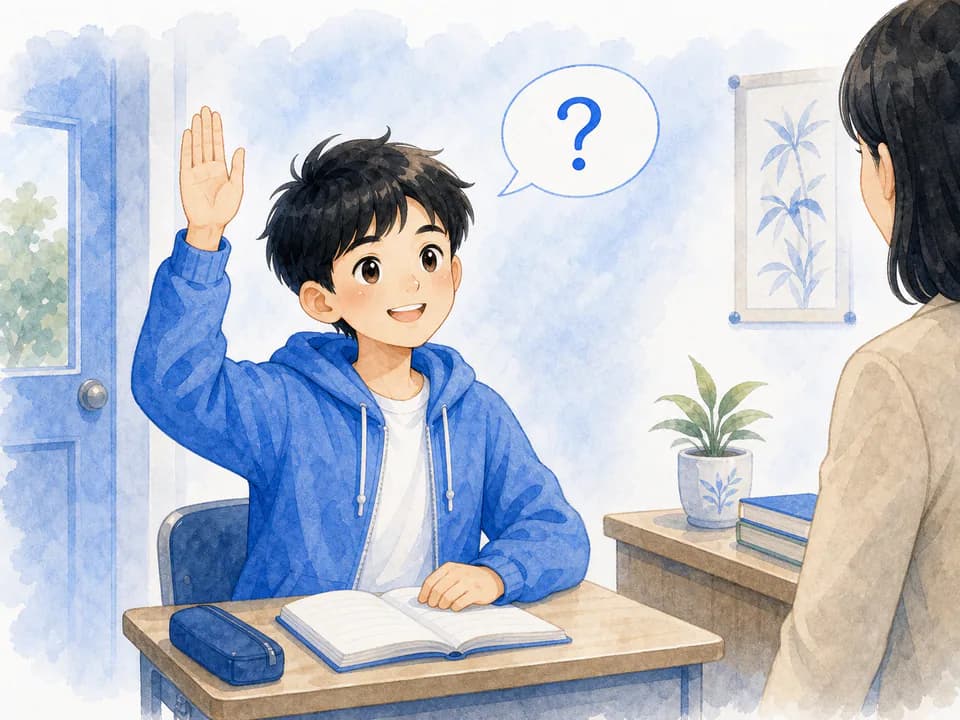
You ask a teacher, classmate, or server for permission. The lesson focuses on polite question frames rather than long explanations.
Contains 2 words
can / be able to
may / can / okay
Contains 3 words
Contains 3 words
请问,我可以在这儿喝水吗?
Qǐngwèn, wǒ kěyǐ zài zhèr hē shuǐ ma?
Excuse me, may I drink water here?
我能问你一个问题吗?
Wǒ néng wèn nǐ yí ge wèntí ma?
Can I ask you a question?
可以。
Kěyǐ.
Yes / You may.
请你喝水吧。
Qǐng nǐ hē shuǐ ba.
Please have some water.
我有一个问题。
Wǒ yǒu yí ge wèntí.
I have a question.
Situation: A student asks the teacher for permission to read a particular book in the classroom.
美美
Meimei
请问,我可以读这本书吗?
Excuse me, may I read this book?
Modal verbs
Use 可以 (kěyǐ) or 能 (néng) before an action to ask whether it is allowed or possible.
Ask permission for an action
Asks whether someone may or can do a short action.
please
excuse me / may I ask
to ask
particle softening tone
question / problem
a little; briefly
可以问吗?
Kěyǐ wèn ma?
May I ask?
你说吧。
Nǐ shuō ba.
Go ahead and speak.
你问吧。
Nǐ wèn ba.
Go ahead and ask.
好吧。
Hǎo ba.
All right.
我可以在这儿喝水吗?
Wǒ kěyǐ zài zhèr hē shuǐ ma?
May I drink water here?
请问,你是谁?
Qǐngwèn, nǐ shì shéi?
Excuse me, who are you?
我能问你吗?
Wǒ néng wèn nǐ ma?
Can I ask you?
王老师
Teacher Wang
可以,你读吧。
Yes, go ahead and read it.
美美
Meimei
可以在这儿读吗?
May I read it here?
王老师
Teacher Wang
可以,在这儿读吧。
Yes, go ahead and read it here.
Situation: A student asks the teacher for permission in class.
美美
Meimei
老师,我有一个问题。
Teacher, I have a question.
王老师
Teacher Wang
可以,你问吧。
Yes, go ahead and ask.
美美
Meimei
我可以不可以喝水?
May I drink water?
王老师
Teacher Wang
可以,喝吧。
Yes, go ahead and drink.
Situation: One classmate checks another's writing ability and asks for a short demonstration.
美美
Meimei
你能写汉字吗?
Can you write Chinese characters?
方方
Fangfang
能,我能写一点儿。
Yes, I can write a little.
美美
Meimei
可以写一下吗?
Could you write a little for me?
方方
Fangfang
可以,我写一下。
Sure, I will write a little.
Situation: A classmate offers water, then checks whether the guest wants more.
方方
Fangfang
请喝一点儿水吧。
Please have some water.
美美
Meimei
好,我喝一点儿。
Okay, I will have a little.
方方
Fangfang
还喝吗?
Would you like more?
美美
Meimei
不喝了。
No more, thanks.
我可以问一下吗 (wǒ kěyǐ wèn yíxià ma) asks permission to ask a brief question.
可以 (kěyǐ) asks for permission to do the action.
我可以问一下吗?
May I ask something?
能 (néng) asks whether the action is possible or allowed.
我能问一下吗?
Can I ask something?
我能说一点儿中文吗?
Can I speak a little Chinese?
我可以不可以喝水?
May I drink water?
Dialogue 01: Reading a Book Here, Turn 1
Ask permission to ask
请问,我可以问一下吗?
Excuse me, may I ask something?
Dialogue 02: In Class, Turn 3
Ask permission to drink
我可以不可以喝水?
May I drink water?
Use 可以 (kěyǐ) before an action when you are asking for permission. Use 能 (néng) when the question is more about ability or possibility. In this lesson, both help you ask short polite permission questions such as 我可以问一下吗 (wǒ kěyǐ wèn yíxià ma).
Polite requests
Use 请问 (qǐngwèn) to open your own question politely. Use 请 (qǐng) before a person or action when politely asking or inviting someone to do something.
Open a polite question
Signals that you are about to ask someone something politely.
请问 (qǐngwèn) comes before the question, like saying excuse me before asking.
Ask or invite someone to act
Politely asks or invites the listener to do the following action.
请你喝水吧 (qǐng nǐ hē shuǐ ba) politely invites the listener to have some water.
请问 (qǐngwèn) prepares the listener for a polite question.
请问,我可以问一下吗?
Excuse me, may I ask something?
请 (qǐng) comes before the person and requested action; it is different from the question opener 请问 (qǐngwèn).
请你喝水吧。
Please have some water.
请问,我可以问一下吗?
Excuse me, may I ask something?
请你喝水吧。
Please have some water.
Dialogue 01: Reading a Book Here, Turn 1
Polite opening
请问,我可以问一下吗?
Excuse me, may I ask something?
Put 请问 (qǐngwèn) before your own question when you politely interrupt someone to ask for information or permission: 请问,我可以问一下吗 (qǐngwèn, wǒ kěyǐ wèn yíxià ma), ‘Excuse me, may I ask something?’
Use 请 (qǐng) before the person or action you are requesting: 请你喝水吧 (qǐng nǐ hē shuǐ ba), ‘Please have some water.’ Here 请 (qǐng) asks or invites the listener to act; it does not introduce the speaker's question. Choose 请问 (qǐngwèn) for ‘Excuse me, may I ask…?’ and 请 (qǐng) for ‘Please do…’.
Sentence-final particles
吧 (ba) can make a short invitation, suggestion, or permission reply softer.
Give soft permission
Lets someone continue with an action gently.
问吧 (wèn ba) means go ahead and ask.
吧 (ba) makes the short permission reply softer.
喝吧。
Go ahead and drink.
Use the action plus 吧 (ba) to invite the listener to continue.
说吧。
Go ahead and say it.
可以,你问吧。
Yes, go ahead and ask.
Dialogue 02: In Class, Turn 2
Go ahead and ask
可以,你问吧。
Yes, go ahead and ask.
Dialogue 02: In Class, Turn 4
Go ahead and drink
可以,喝吧。
Yes, go ahead and drink.
Use 吧 (ba) at the end of a short reply when you are inviting someone to continue or giving gentle permission. In this lesson, 问吧 (wèn ba) means go ahead and ask, and 喝吧 (hē ba) means go ahead and drink.
Verb + 一下 softened request
一下 (yíxià) after a verb makes the action sound brief and polite.
Make an action brief
Softens a request by making the action sound quick.
问一下 (wèn yíxià) means ask briefly or ask something.
一下 (yíxià) follows the verb.
问一下
ask briefly
我可以问一下吗?
May I ask something?
Dialogue 01: Reading a Book Here, Turn 1
Brief polite ask
请问,我可以问一下吗?
Excuse me, may I ask something?
Put 一下 (yíxià) after a verb when you want the action to sound quick or not too demanding. 问一下 (wèn yíxià) is softer than just 问 (wèn) when asking permission to ask a question.
Focus
