Level 1 - Lesson 19
The lesson uses airports, taxis, trains, planes, and hotels to practice travel methods and ongoing actions.
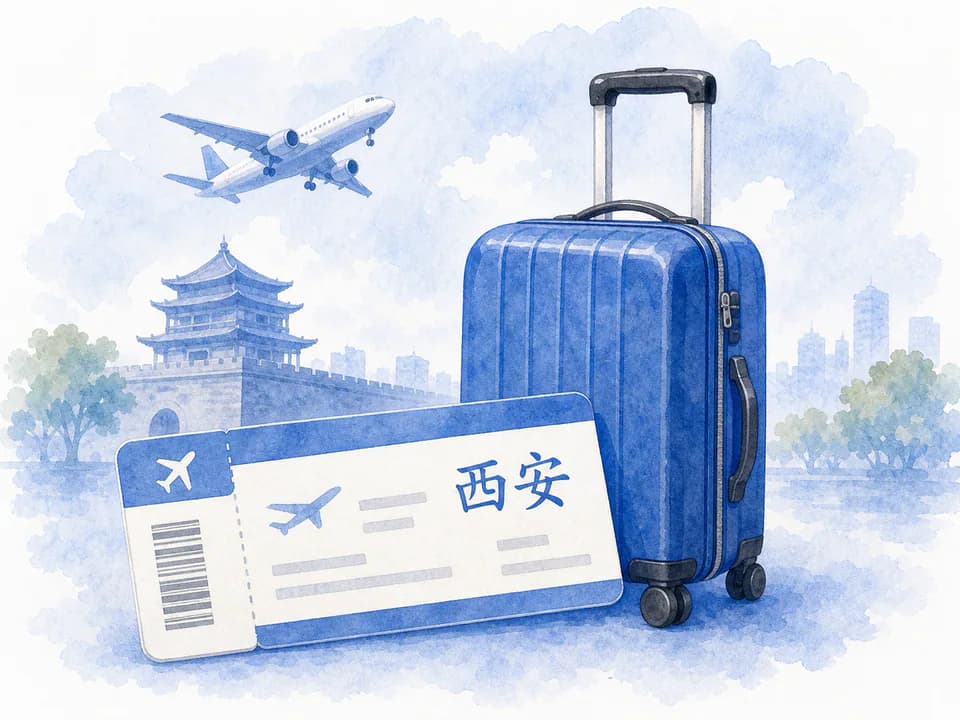
Contains 5 words
car; vehicle
train
airplane
taxi
to drive a car
Contains 3 words
Contains 6 words
Contains 5 words
你怎么去大兴机场?
Nǐ zěnme qù Dàxīng Jīchǎng
How are you going to Daxing Airport?
我坐火车去
Wǒ zuò huǒchē qù
I go by train.
我坐飞机去西安
Wǒ zuò fēijī qù Xī'ān
I fly to Xi'an.
出租车在哪儿?
Chūzūchē zài nǎr
Where is the taxi?
出租车在那边
Chūzūchē zài nàbiān
The taxi is over there.
Situation: A traveler asks how someone is going to the airport and where they will fly.
美美
Meimei
你怎么去大兴机场?
How are you going to Daxing Airport?
Ongoing activity with 正在
Use 正在 (zhèngzài) before 看 (kàn) or 听 (tīng) to say the looking or listening activity is happening right now.
Action happening now
Shows someone is in the middle of an action.
to drive; to open
how
to sit; to take (transport)
see; meet
in the middle of; currently
look; watch; read
listen
see (successfully)
hear (successfully)
airport
Daxing Airport
pick up; meet
Xi'an
Xi'an Hotel
你怎么去学校?
Nǐ zěnme qù xuéxiào
How do you go to school?
我坐车去
Wǒ zuò chē qù
I go by car.
我坐出租车去机场
Wǒ zuò chūzūchē qù jīchǎng
I take a taxi to the airport.
他开车来
Tā kāichē lái
He drives here.
坐出租车
Zuò chūzūchē
Take a taxi.
我坐火车去西安
Wǒ zuò huǒchē qù Xī'ān
I go to Xi'an by train.
我坐出租车去
Wǒ zuò chūzūchē qù
I go by taxi.
我正在听。
Wǒ zhèngzài tīng.
I am listening now.
我听见王老师。
Wǒ tīngjiàn Wáng lǎoshī.
I hear Teacher Wang.
西安饭店在哪儿?
Xī’ān Fàndiàn zài nǎr?
Where is Xi'an Hotel?
方方
Fangfang
我坐出租车去机场。
I am taking a taxi to the airport.
美美
Meimei
你坐飞机吗?
Are you taking a plane?
方方
Fangfang
坐,我坐飞机去西安。
Yes, I am flying to Xi’an.
Situation: At the airport, one classmate checks whether another classmate has seen Teacher Wang.
美美
Meimei
你在机场吗?
Are you at the airport?
方方
Fangfang
在,我接王老师。
Yes, I am here to pick up Teacher Wang.
美美
Meimei
你看见王老师了吗?
Have you seen Teacher Wang?
方方
Fangfang
还没有,我正在看那边的人。
Not yet. I am looking at the people over there.
Situation: Two classmates compare how they and Teacher Wang will travel to the same destination.
美美
Meimei
你怎么去西安?
How will you go to Xi'an?
方方
Fangfang
我开车去。
I will drive there.
美美
Meimei
王老师呢?
What about Teacher Wang?
方方
Fangfang
她坐火车去。
She will take the train.
Situation: One classmate reports Teacher Wang's stated location, then confirms the pickup destination.
美美
Meimei
你听见王老师说什么了吗?
Did you hear what Teacher Wang said?
方方
Fangfang
听见了,她说在西安饭店。
Yes. She said she is at Xi'an Hotel.
美美
Meimei
你去接她吗?
Will you go pick her up?
方方
Fangfang
去,我去西安饭店接她。
Yes, I will go to Xi'an Hotel to pick her up.
我正在看 (wǒ zhèngzài kàn) means I am looking right now; it does not yet say whether I successfully see the person.
Separate activity from result
Use the simple activity verb with 正在 (zhèngzài), then use the result verb when seeing or hearing succeeds.
我正在听 (wǒ zhèngzài tīng) is the ongoing activity; 我听见王老师了 (wǒ tīngjiàn Wáng lǎoshī le) reports the achieved result.
正在 (zhèngzài) comes before the action.
我正在看飞机。
I am looking at the plane.
Use 正在 (zhèngzài) with the activity verb 听 (tīng) while listening is in progress.
我正在听。
I am listening now.
听见 (tīngjiàn) says the listening succeeded; use the completed-result pattern, not 正在 (zhèngzài) + 听见 (tīngjiàn).
我听见王老师了。
I heard Teacher Wang.
还没有,我正在看。
Not yet. I am looking now.
我正在听。
I am listening now.
我听见王老师了。
I heard Teacher Wang.
Dialogue 02: Looking for Teacher Wang at the Airport, Turn 4
Looking now
还没有,我正在看。
Not yet. I am looking now.
Put 正在 (zhèngzài) before an activity that is happening now: 我正在看 (wǒ zhèngzài kàn) means ‘I am looking,’ and 我正在听 (wǒ zhèngzài tīng) means ‘I am listening.’
Keep the activity and its result separate. 看 (kàn) and 听 (tīng) name what the person is doing; 看见 (kànjiàn) and 听见 (tīngjiàn) say that the person successfully sees or hears something. In this lesson, use 正在看 (zhèngzài kàn) or 正在听 (zhèngzài tīng) for the ongoing attempt, then use 看见了 (kànjiàn le) or 听见了 (tīngjiàn le) when the result happens. Do not build the Level 1 model with 正在看见 (zhèngzài kànjiàn) or 正在听见 (zhèngzài tīngjiàn).
Negating and questioning past actions
Ask whether an event happened with verb + 了 (le) + 吗 (ma). Answer with verb + 了 (le) if it happened, or 没有 (méiyǒu) + verb if it did not.
Ask whether the event happened
Checks whether an action or result has happened by now.
你看见王老师了吗? (Nǐ kànjiàn Wáng lǎoshī le ma?) asks whether Teacher Wang has been seen yet.
Give a positive or negative answer
Confirm the event with 了 (le), or negate it with 没有 (méiyǒu).
还没有 (hái méiyǒu) can stand alone when the missing verb is clear from the question.
了吗 (le ma) asks whether the seeing result has happened by now.
你看见王老师了吗?
Have you seen Teacher Wang?
还没有 (hái méiyǒu) gives the negative answer; the following sentence explains what is happening now.
还没有,我正在看。
Not yet. I am looking now.
The verb phrase names the result, and 了 (le) confirms that it happened.
你看见王老师了吗?
Have you seen Teacher Wang?
我没有看见王老师。
I have not seen Teacher Wang.
我听见王老师了。
I heard Teacher Wang.
Dialogue 02: Looking for Teacher Wang at the Airport, Turn 3
Ask whether Teacher Wang has been seen
你看见王老师了吗?
Have you seen Teacher Wang?
Dialogue 02: Looking for Teacher Wang at the Airport, Turn 4
Answer not yet
还没有,我正在看。
Not yet. I am looking now.
Use subject + verb + 了 (le) + 吗 (ma) to ask whether an event has happened by now. This is not a general past-tense ending: the question checks whether the event occurred or reached its result. In a positive answer, repeat the verb and add 了 (le). In a negative answer, put 没有 (méiyǒu) before the verb and leave out 了 (le). When the verb is already clear from the question, 还没有 (hái méiyǒu) is a complete short answer meaning ‘not yet.’
Serial route and pickup action
Put related travel actions in their real order under one subject: say how or where someone goes, then say the action they go there to do.
Say method plus destination
Chains a transport action with going to a place.
坐飞机去西安 (zuò fēijī qù Xī’ān) says the person flies to Xi'an.
Say where you go and why
Chains a route with the purpose action performed at the destination.
The transport action comes before 去 (qù) plus destination.
我坐出租车去机场。
I take a taxi to the airport.
The route comes first; 接她 (jiē tā) gives the purpose of going there.
我去西安饭店接她。
I am going to Xi'an Hotel to pick her up.
我坐飞机去西安。
I take a plane to Xi'an.
我去机场接王老师。
I am going to the airport to pick up Teacher Wang.
我去西安饭店接她。
I am going to Xi'an Hotel to pick her up.
Dialogue 01: Going to the Airport, Turn 2
Taxi to airport
我坐出租车去机场。
I am taking a taxi to the airport.
Dialogue 04: Hearing Where to Meet, Turn 4
Go to the hotel to pick her up
接,我去西安饭店接她。
Chinese can place connected verb phrases one after another when the same person performs the whole sequence. To say the travel method, use 坐 (zuò) + transport + 去 (qù) + destination. To add the purpose, use 去 (qù) + place + action + object, as in 我去西安饭店接她 (wǒ qù Xī’ān Fàndiàn jiē tā): first I go to the hotel, and the purpose is to pick her up. These are connected route-and-purpose chains, not unrelated actions separated by a comma.
I heard Teacher Wang.
Dialogue 04: Hearing Where to Meet, Turn 2
Confirm that the result happened
听,我听见王老师了。
Yes, I heard Teacher Wang.
我去西安饭店接她 (Wǒ qù Xī’ān Fàndiàn jiē tā) means I go to Xi'an Hotel in order to pick her up.
Yes, I am going to Xi'an Hotel to pick her up.
